
Sustainability at Triangle Manufacturing
2024 was the hottest year on record, according to NASA and the World Meteorological Organization (WMO). The new benchmark broke a record set only one year earlier, fueling concerns about the trendline and increasing focus on environmental sustainability. This is especially true for the manufacturing industry, estimated to be responsible for 12% of U.S. Greenhouse Gas Emissions.
The Intergovernmental Panel on Climate Change (IPCC) presented 2023 data that shows we are at the threshold of irreversible temperature changes in the global climate. At Triangle Manufacturing Company, we’re invested in taking proactive steps to minimize our environmental impact. Our commitment to sustainability is reflected in our innovative production processes, use of eco-friendly materials and dedication to reducing waste and energy consumption.
Turning the Tide with Water-Based Lubricants
The use of chlorinated fluorocarbons (CFCs) in industrial lubricants contributes to ozone depletion and global warming. At Triangle, sustainable lubricants are a large part of pursuing a more sustainable future. We have fully transitioned away from CFCs and are now shifting exclusively to water-based lubricants, with mandatory screenings for all our products.
Not only are water-based lubricants environmentally friendly, but they also have benefits that conventional lubricants do not. Thanks to water’s natural cooling properties, water-based lubricants reduce friction and wear, which in turn lowers resistance, energy consumption and associated CO2 emissions.
Transforming Tomorrow: Our Commitment to Recycling Raw Materials
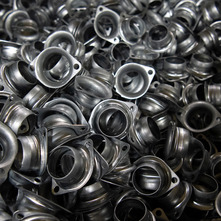
Triangle uses a variety of metals to manufacture our products, and we ensure that all of them are fully recycled. Steel is the primary raw material used for our products. It’s 100% recyclable and reusable. The amount we recycle is substantial, as we contribute to the annual recycling of 60-80 million tons of steel used in new products. As a company constantly seeking to minimize our environmental footprint, we consciously optimize the amount of scrap we produce on each roll of steel. Our commitment to efficiently utilizing our steel stock and recycling scrap remains steadfast as we work to reduce greenhouse gas emissions.
Dual Purpose Power: Maximizing Energy with Compressed Air Heating
As a metal component manufacturer, it’s imperative that we maintain a specific temperature on our floor to avoid negatively affecting raw materials. This means that we’re cooling our facility in the summer and heating it through the winter. Controlling the temperature of a building can be an inefficient use of energy. It also contributes to carbon emissions and requires an excessive amount of fossil fuels. To minimize these impacts, Triangle utilizes most of the heat generated from compressed air to warm the building during the winter. This helps us use our energy supply more efficiently, capturing some of the heat generated by our manufacturing process to reduce our dependence on fossil fuels, and reduce our overall waste.
Looking Forward to the Future
Combined, all these efforts underscore Triangle’s commitment to sustainability amidst rising global temperatures and the urgent need for environmental stewardship. It’s a coordinated effort between us, our suppliers, and our customers—let’s work together towards a better future!
